 by
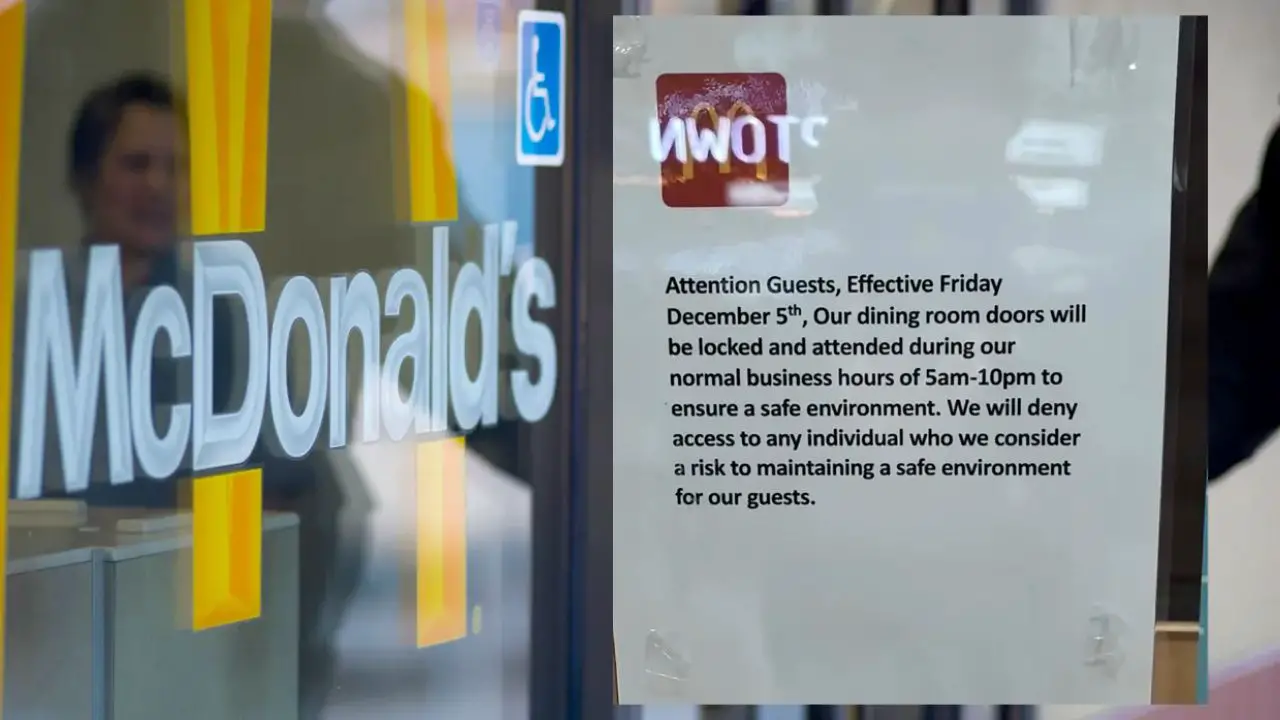
by Minneapolis, Minnesota — A handwritten notice taped to the front door of a McDonald’s in Uptown Minneapolis is igniting renewed debate about public safety, business security, and how retailers are responding to persistent crime in the area.
The sign, which recently went viral on social media, informs customers that the restaurant’s dining room doors will remain locked and attended during normal business hours, from 5 a.m. to 10 p.m., citing the need to ensure a safe environment.
According to the notice, access may be denied to individuals considered a risk to maintaining safety for guests and employees.
Local Franchise Owner Cites Safety and Longevity
Mike Darula, the local owner and operator of the Uptown location, said the decision followed ongoing challenges tied to safety and trespassing. In a statement to Fox News Digital, Darula noted that the restaurant has served the Uptown community for more than 30 years, emphasizing that the move was not made lightly.
“At our Uptown restaurant, we’ve made some updates to our security measures to help ensure a safe and welcoming environment for both our crew and customers,” Darula said.
He added that the restaurant had previously explored community-based solutions before deciding to lock its doors, suggesting that less restrictive approaches were attempted but proved insufficient.
Trespassing and Security Issues Prompt Change
According to the franchise owner, the Uptown McDonald’s has dealt with ongoing trespassing issues, which ultimately led to the tighter access policy. By keeping doors locked and staffed, employees can better manage who enters the restaurant while continuing normal operations inside.
The policy does not indicate a closure of the dining room. Instead, it allows staff to control entry on a case-by-case basis, a strategy increasingly seen in urban areas where businesses face repeat disturbances.
Minneapolis Crime Data Adds Context
The decision comes amid continued concerns about violent crime levels in Minneapolis. According to police data, the city recorded 4,473 total violent crimes this fiscal year, including 2,839 aggravated assaults and 65 homicides.
While crime rates fluctuate by neighborhood, Uptown has been among the areas drawing heightened attention from both residents and business owners concerned about safety, especially during late-night and early-morning hours.
There are 11 McDonald’s restaurants in Minneapolis, part of more than 13,500 locations nationwide operated by McDonald’s. Industry observers note that while locking doors is uncommon during regular hours, similar measures have been adopted in high-incident locations across the country.
Federal Enforcement Efforts in the Twin Cities
The broader Twin Cities metro area has also seen increased federal law enforcement activity. The U.S. Department of Homeland Security has stepped up enforcement efforts through Operation Metro Surge, a multi-agency initiative aimed at targeting violent offenders.
As part of the operation, DHS said nearly a dozen individuals, including child sex offenders, domestic abusers, and violent gang members, were recently arrested.
“ICE law enforcement are risking their lives to protect Minnesotans,” DHS Assistant Secretary Tricia McLaughlin said in a statement earlier this month. “No matter when and where, ICE will find, arrest and deport all criminal illegal aliens.”
The arrests were carried out with support from Immigration and Customs Enforcement, which DHS says remains focused on removing individuals considered threats to public safety.
Read Also: $800,000 in Stolen Goods Recovered After Multi-City Retail Theft Operation, 13 Arrested
Community Reaction Mixed
Reaction to the McDonald’s policy has been divided. Some residents argue the move reflects a necessary response to real safety risks, while others worry it signals a troubling normalization of restricted access in everyday spaces.
Business owners across Minneapolis continue to weigh similar decisions as they balance employee safety, customer experience, and community relations. Security experts say such measures are often viewed as temporary solutions when longer-term crime reduction efforts have yet to take hold.
A Sign of a Larger Issue
The Uptown McDonald’s decision underscores a broader challenge facing urban retailers: adapting operations to protect staff and customers while remaining open and accessible.
As crime prevention strategies evolve at both local and federal levels, businesses remain on the front lines, making difficult choices that reflect the realities on the ground.
Do you think locking doors during business hours is a reasonable safety step, or does it go too far? Share your thoughts in the comments below.