
 by
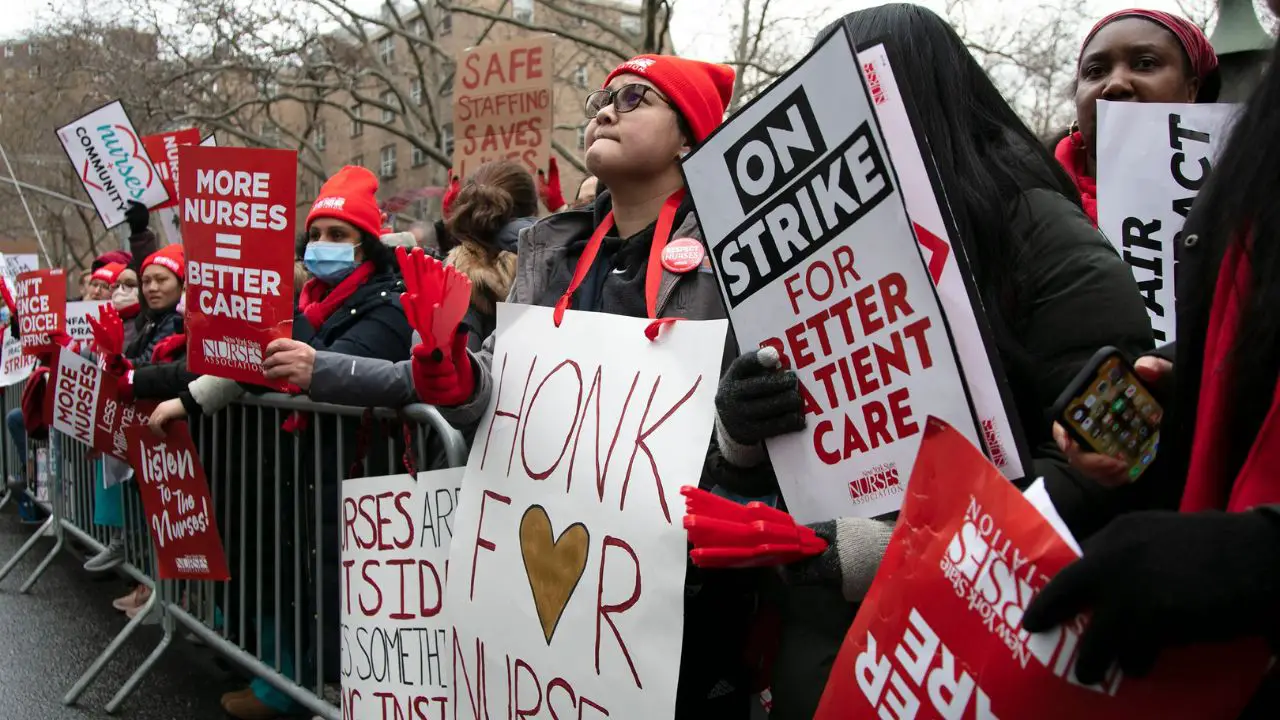
by New York City, New York — Thousands of nurses across New York City could walk off the job in just days after the New York State Nurses Association (NYSNA) formally issued a 10-day strike notice to 12 private sector hospitals in New York City, along with three hospitals on Long Island.
If no agreements are reached before the deadline, up to 20,000 nurses say they are prepared to strike on January 12, a move union leaders warn could become the largest nurse strike in New York City history.
The dispute centers on safe staffing levels, health care benefits, and protections against workplace violence, issues nurses say directly impact patient safety and the quality of care delivered across the city’s hospital system.
Strike notice follows months of stalled negotiations
According to union officials, the strike notices were delivered Friday after months of contract negotiations failed to produce agreements.
NYSNA representatives say bargaining with hospital administrators has been ongoing since September, but progress has stalled as hospitals push back on staffing requirements and benefit demands.
“At the end of that 10th day, we reserve the right to go out on strike,” said Simone Way, a nurse at Mount Sinai Morningside Hospital and a member of the NYSNA executive committee. “We will be reserving our care and services from the patients, and we will be on the picket line.”
Way emphasized that striking is not a decision nurses take lightly, but one they believe has become unavoidable.
Safe staffing at the heart of the dispute
One of the most critical issues raised by NYSNA is unsafe nurse-to-patient ratios, which nurses argue have worsened since the pandemic.
Way described conditions that she says are common on hospital floors.
“So I’m one nurse. I have five patients,” she explained. “When I go on break and I have no break relief, another coworker has to cover for me. That nurse already has five patients — now they’re responsible for ten. That is an unsafe situation, and the hospital knows that.”
Nurses argue that understaffing leads to delayed care, missed symptoms, and higher risks for medical errors, particularly in emergency departments and intensive care units.
Union leaders say hospitals have relied too heavily on mandatory overtime and temporary staffing rather than committing to permanent solutions.
Health care benefits for frontline nurses
Another major sticking point involves health care benefits, which nurses say should reflect the physical and emotional toll of their work.
“Nurses should have some of the best health care benefits that there are,” Way said, “because we take care of the sickest population.”
NYSNA argues that rising health insurance costs and reduced coverage options have placed additional strain on frontline nurses, many of whom still deal with long-term effects from COVID-era working conditions.
Union leaders say improving benefits is key to retaining experienced nurses, particularly as hospitals nationwide continue to face staffing shortages.
Read Also: Two New Speed Cameras Go Live in Baltimore City School Zones Starting January 5
Workplace violence concerns remain unresolved
Nurses also cite workplace violence as a growing and under-addressed issue.
Incidents involving verbal threats, physical assaults, and aggressive behavior from patients or visitors have increased in recent years, according to union data.
NYSNA is pushing for stronger protections, including:
- Improved security staffing
- Clear response protocols
- Training programs for de-escalation
- Accountability measures when incidents occur
Union leaders say hospitals have been slow to implement meaningful changes, leaving nurses vulnerable on the job.
Hospitals warn of patient care disruptions
Hospital groups have pushed back against the strike threat, arguing that a walkout could disrupt patient care and place additional strain on an already stressed health care system.
Hospital representatives say they have made offers they believe are reasonable, citing rising operational costs and financial pressures.
Administrators also note that hospitals would be forced to spend tens of millions of dollars to bring in temporary replacement nurses if a strike occurs — money they argue could otherwise go toward long-term improvements.
However, NYSNA counters that hospitals routinely find funding for executive compensation and capital projects, while frontline staffing remains understaffed.
What happens next
The 10-day countdown is now underway.
If agreements are not reached by January 12, nurses say they are prepared to walk out across multiple facilities simultaneously.
Union leaders stress that negotiations could still resume and that a deal is possible if hospitals return to the table with what nurses consider realistic proposals.
“I would implore management to give us real options so that we can negotiate across the table,” Way said.
Both sides acknowledge the stakes are high — not just for nurses, but for patients across New York City who rely on hospital care every day.
Potential impact across New York City
A strike of this scale would affect hospitals across Manhattan, Brooklyn, Queens, the Bronx, and Long Island, with ripple effects across emergency care, elective procedures, and inpatient services.
Patients could face:
- Delayed procedures
- Longer emergency room wait times
- Reduced hospital capacity
City and state officials have not yet announced whether contingency plans are being developed.
As the deadline approaches, all eyes are on negotiations that could determine whether New York City’s hospitals see a historic walkout — or a last-minute deal.
Do you believe hospitals should be required to meet nurse staffing demands, even if it increases costs? Should nurses strike if patient safety is at risk? Share your thoughts and join the discussion in the comments below.