 by
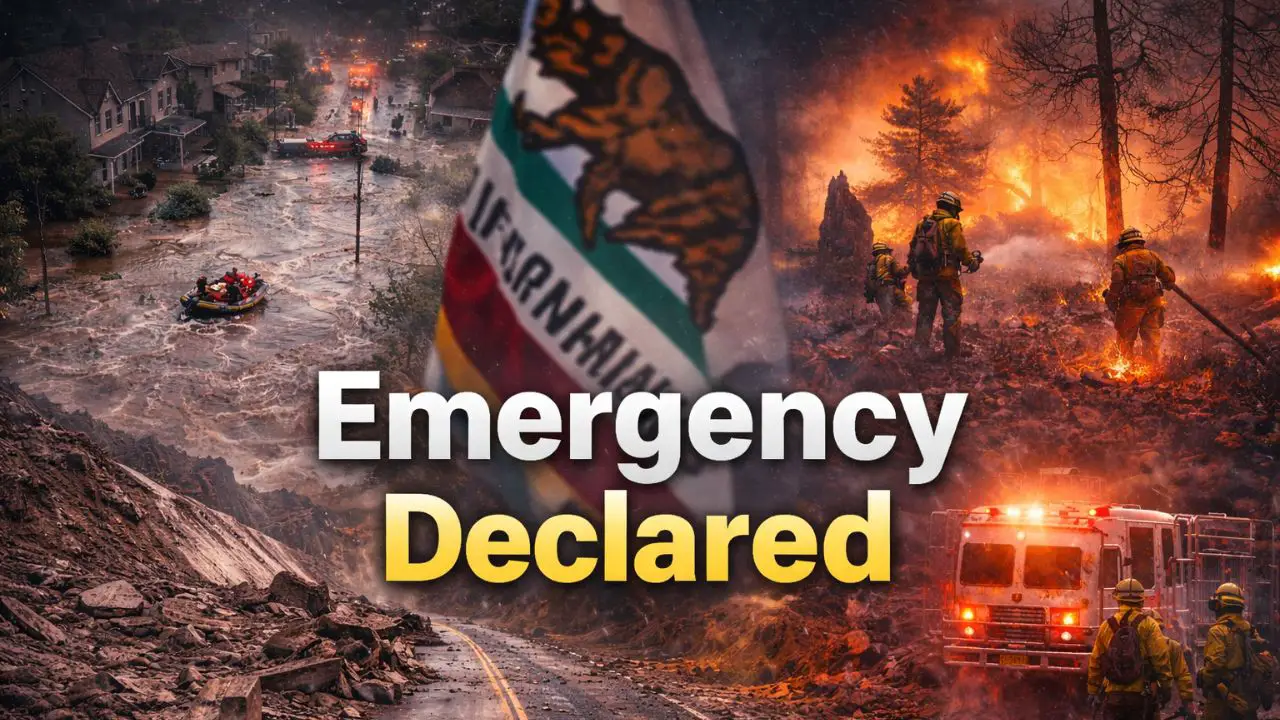
by Sacramento, California — California Governor Gavin Newsom has declared states of emergency for six major weather-related disasters that caused significant damage across the state in 2025, his office announced Tuesday.
The emergency proclamations are intended to unlock state assistance, funding, and recovery resources for impacted communities as California continues to face an increasing number of extreme weather events.
According to the governor’s office, the newly declared emergencies span multiple regions and disaster types, ranging from windstorms and flooding to wildfires and a tsunami.
Why Emergency Declarations Matter
State of emergency declarations allow local governments to access critical state support, including disaster recovery funding, emergency services assistance, debris removal, and infrastructure repair.
Officials said these declarations are a key step in helping communities recover more quickly from disasters that overwhelm local resources.
Emergency proclamations ensure communities are not left to recover alone after large-scale disasters, the governor’s office said.
Six Severe Weather Events Declared Emergencies
The following six weather events were officially proclaimed states of emergency due to the extent of damage they caused:
- Windstorms in Rancho Cucamonga (January)
- Tsunami impacts in Del Norte County (July)
- Gifford Fire affecting San Luis Obispo and Santa Barbara counties (August–September)
- Monsoon storms in Imperial County (August)
- Storms and mudslides in Sierra County (late August)
- Severe storms in San Bernardino and Imperial counties (mid-September)
Each of these events caused widespread disruption, damage to infrastructure, or threats to public safety, prompting requests for state-level intervention.
California Sees Surge in Emergency Declarations
With these six new proclamations, California has now recorded 16 total state of emergency declarations in 2025 alone — underscoring the growing impact of extreme and unpredictable weather across the state.
State officials say the frequency of these declarations reflects ongoing climate-related challenges, including stronger storms, increased wildfire risk, and extreme rainfall events that can trigger flooding and mudslides.
Resources Available to Affected Communities
Communities covered under the emergency declarations may be eligible for:
- State disaster recovery assistance
- Emergency protective measures
- Public infrastructure repair funding
- Coordination with state emergency response agencies
Read Also: Winter Weather Advisory Issued as Snow and Ice Impact Eastern New York Roads
Local governments are encouraged to work closely with the state to identify recovery needs and request support.
More Information for Residents
The governor’s office said detailed information about each of the six newly declared emergencies is available through official state resources.
Residents can also find a complete list of all active state of emergency declarations in California to determine whether their community is currently covered and what assistance may be available.
Ongoing Focus on Preparedness
State leaders continue to stress the importance of preparedness and resilience as California faces more frequent severe weather.
Officials urge residents in disaster-prone areas to stay informed, follow evacuation guidance when issued, and take steps to protect homes and families ahead of future weather events.
Do you live in an area affected by one of these emergencies? Share how the weather impacted your community and recovery efforts in the comments below.